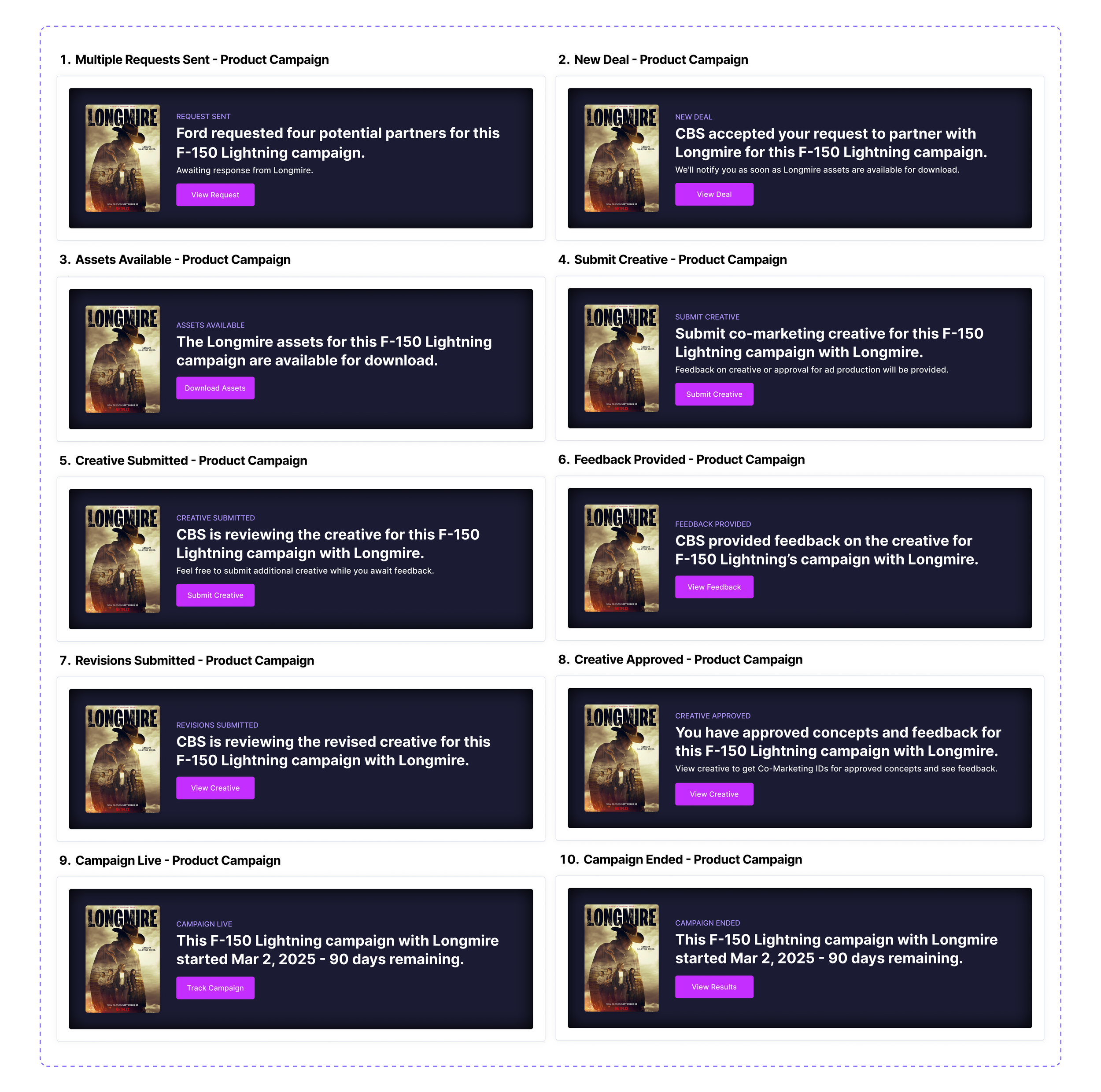
Deal Systems: Structuring Partnership Workflows
The deal workspace structures the full lifecycle of a partnership, from initial request through approvals, asset sharing, launch, and performance tracking. It serves as a shared workspace where brand and content partners coordinate work, with the system surfacing next steps as responsibility shifts to maintain momentum. It tracks deal state and preserves a continuous record of decisions, approvals, and execution.
This environment enables users like Ashley at Ford to:
View the complete history of a deal, including comments, tasks, and key decisions.
Track progress across milestones, from partner acceptance through campaign performance.
Collaborate in a shared workspace with access to deal terms, assets, creative, and approved deliverables.
Invite contributors and move directly from dashboard notifications into the deal workspace.
Role: Founding Product Designer and Director — defined UX strategy, platform architecture, and AI-driven workflows

Explore this Project in Figma
A guided flow through the core experience. Navigate at your own pace.
A Continuous Flow of Deal Activity
A system of record for managing a deal across a continuous stream of actions, decisions, and outcomes.
Each stage is connected through a shared timeline, allowing teams to understand what has happened, what is in progress, and what needs to happen next.
Lifecycle
End-to-end partnership workflow.
→ Discovery
→ Negotiation
→ Planning
→ Execution
→ Performance
The Problem: Fragmented Deal Activity
Deal activity was distributed across email threads, shared documents, messaging platforms, and internal tools, with no single system to capture decisions, actions, and progress over time.
As deals progressed, communication became fragmented, responsibilities were unclear, and critical context was lost. Teams lacked a reliable way to understand what had happened, what was in progress, and what needed to happen next.
Without a shared system of record, coordination broke down across stakeholders, making it difficult to maintain alignment, track decisions, and move deals forward with confidence.
My Role
I designed the deal page as the system of record for managing deal activity over time, recording every action, decision, and update in a shared workspace with full visibility and access for all stakeholders.
I defined the platform architecture and interaction model for structuring deal activity end-to-end. Each deal serves as a continuous record of collaboration, where both brand and content partners track progress, contribute work, and stay aligned.
I designed a system that surfaces activity in context, making it clear what has happened, what is in progress, and what needs to happen next. By structuring communication, decisions, and actions into a unified timeline, the system ensures that work remains visible, traceable, and actionable.
This approach creates continuity across the lifecycle of a deal, enabling teams to maintain alignment, preserve context, and move work forward without losing momentum.
How Ashley Manages Partnership Deals Across Teams, Decisions, and Timelines
Ashley manages deals across multiple brands, campaigns, and stakeholders. The deal page serves as the system of record, giving her a clear, real-time view of what has been decided, what is in progress, and what needs to happen next.
Aligns partners in a shared workspace where everyone works from the same information.
Captures a complete history of decisions and actions, reducing miscommunication.
Makes ownership and next steps explicit, so work moves forward without delays.
Preserves full context, keeping terms, creative, and deliverables accessible and current.
Allows stakeholders to join at any stage without disrupting progress.

Example components used in this project.
Components support interactive prototypes, developer handoff, and consistent implementation across the platform. They are designed for reuse across workflows, enabling faster iteration and scalable implementation.