Conversational AI: Partner Discovery and Insights
I designed a conversational interface to MutualMarkets’ partnership intelligence system, allowing prospective brands to explore partner recommendations and understand the reasoning behind them before creating an account.
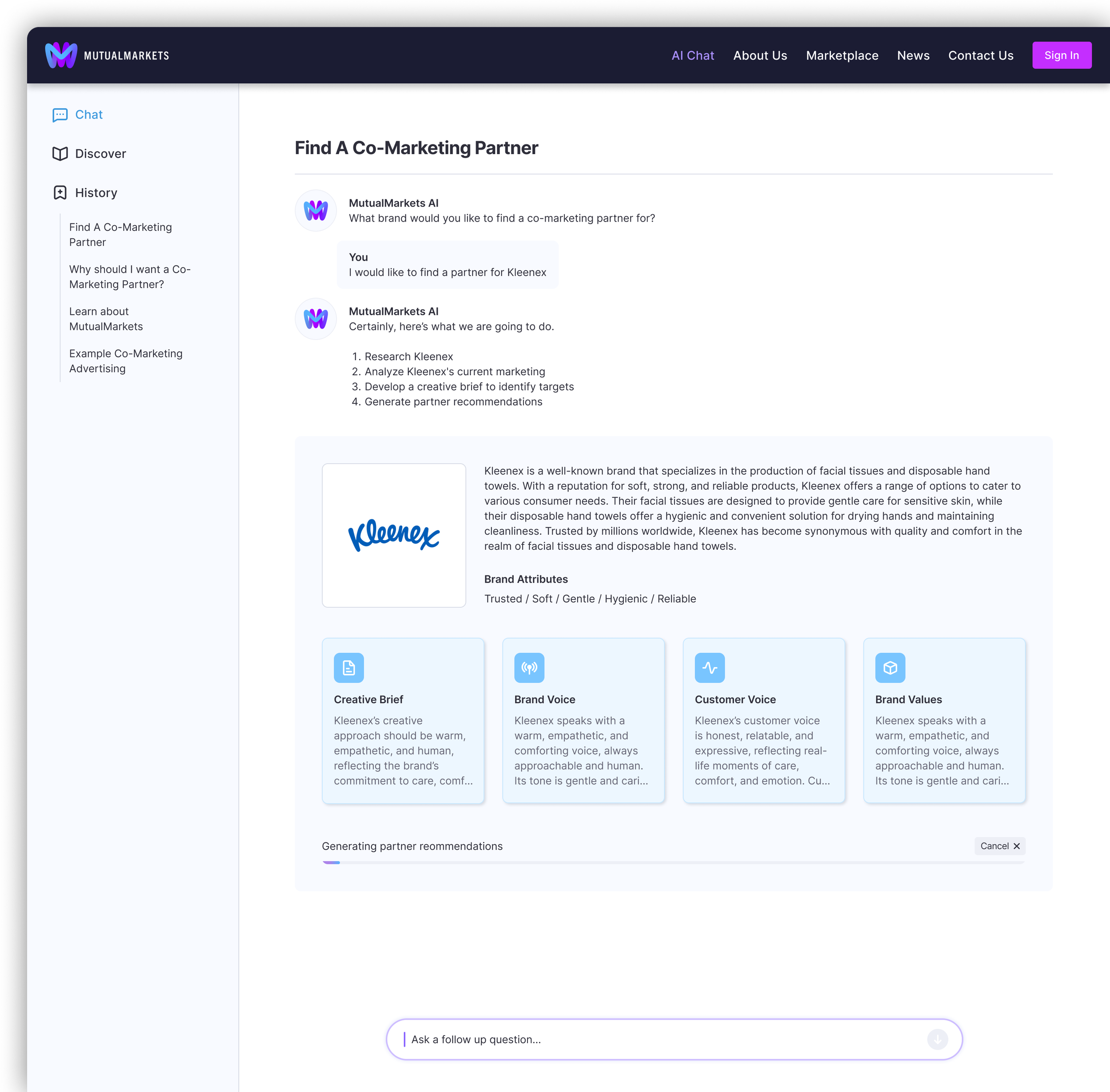
The experience exposes how the platform analyzes brand attributes, generates campaign context, and identifies aligned entertainment partners—making the system’s strategic logic visible before users commit to the product.
Through the Find a Partner experience, users can:
Enter a brand and see how the platform analyzes voice, values, and audience signals.
Review AI-generated brand insights that establish campaign context.
Generate a campaign brief similar to those created inside the platform.
See how brand context informs recommended entertainment partners.
Understand why partners are recommended, not just which partners appear.
Role: Founding Product Designer — defined UX strategy, experience architecture, and platform workflows.
From hidden intelligence to transparent insights.
A system that exposes the platform’s intelligence by analyzing brand inputs and generating explainable partner recommendations.
Each stage builds on the last, enabling teams to understand how recommendations are generated, evaluate alignment, and explore opportunities with clarity.
Workflow
Intelligence and recommendation workflow.
→ Brand Input
→ Brand Analysis
→ Signal Processing
→ Partner Matching
→ Explainable Insights
The Problem: Hidden Intelligence and Limited Access
MutualMarkets’ core value was its intelligence layer—the system that analyzed brand attributes, audience alignment, and cultural signals to generate partner recommendations.
However, this intelligence was only accessible inside the platform. Prospective brands had no way to see how recommendations were generated, understand the reasoning behind them, or evaluate potential partnerships before committing.
Without visibility into how the system worked, recommendations felt opaque. Teams could not validate alignment, explore opportunities with confidence, or understand why certain partners were a strong fit.
As a result, trust was limited, adoption was slower, and the platform’s core value was difficult to communicate before onboarding.
My Role
As the founding product designer, I designed the conversational interface that exposes the platform’s intelligence layer to prospective brands.
I defined the experience architecture and interaction model for translating complex system outputs into a clear, interactive conversation. The interface allows users to input brand information, receive tailored partner recommendations, and understand the reasoning behind each recommendation.
I designed workflows that surface brand analysis, audience alignment, and cultural signals in a structured, explainable way, enabling users to see not just which partners are recommended, but why.
By exposing the intelligence layer through a conversational experience, the system transforms opaque recommendations into transparent insights, allowing prospective brands to engage with the platform, explore opportunities, and build confidence before creating an account.
Explore this project in Figma.
To make reviewing a large body of work easier, each prototype includes a guided pointer that walks you through the primary flow. Click to advance at your own pace. Prototypes open in a new window.
How Ashley evaluates the platform before committing.
The conversational AI gives Ashley a hands-on preview of how MutualMarkets analyzes her brand and recommends entertainment partners, allowing her to evaluate opportunities and build confidence before committing to the platform.
With this experience, Ashley can:
• Understand why partners are recommended based on brand and audience alignment.
• Review brand insights and AI-generated campaign briefs grounded in her inputs.
• Explore how changes in brand inputs influence partner recommendations.
• Evaluate potential partners before creating an account.
• Identify campaign opportunities she can share with her team.

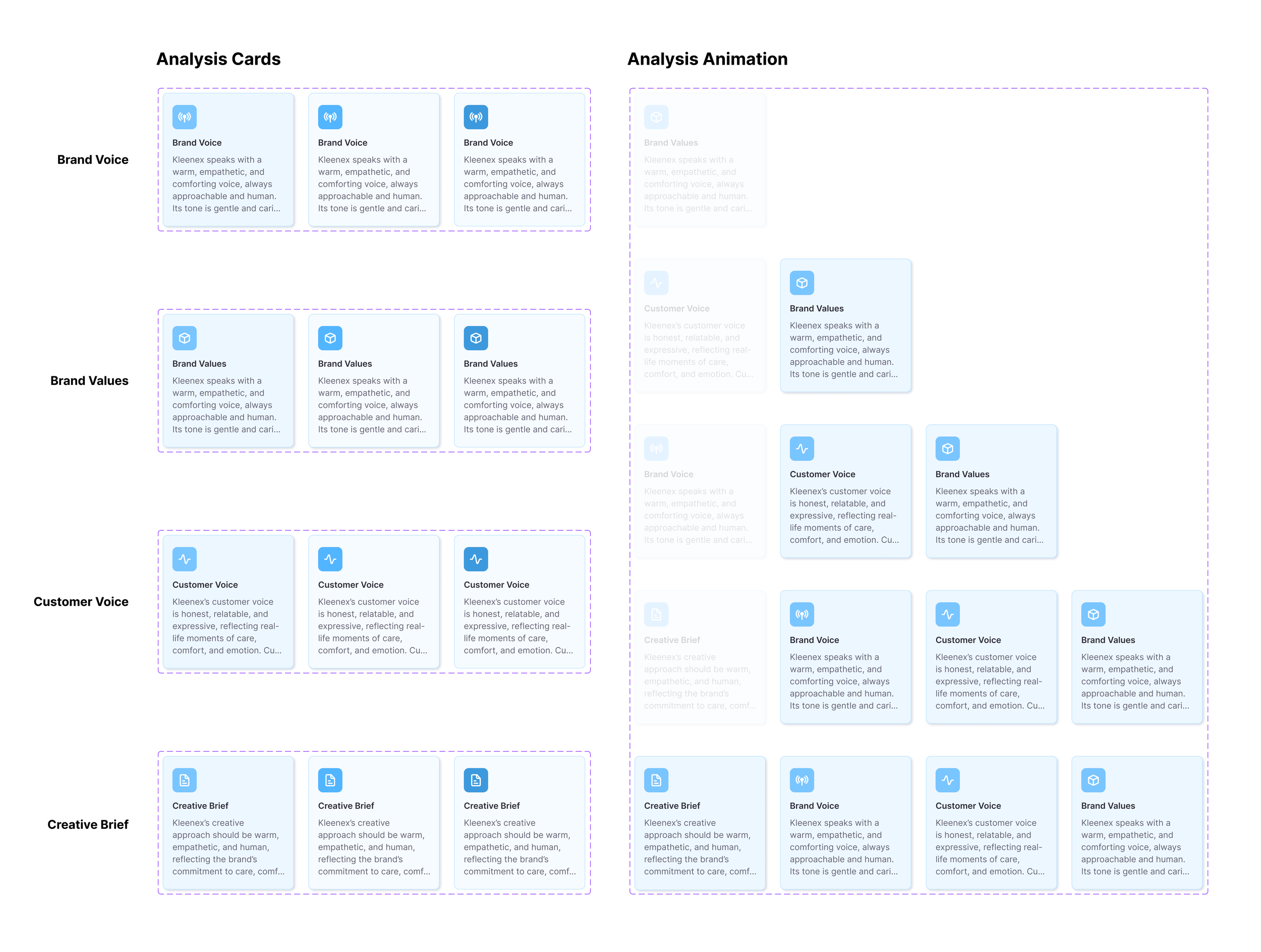
Design system components supporting a scalable platform.
These components support interactive prototypes, developer handoff, and consistent implementation across the platform. They are designed for reuse across workflows, enabling faster iteration and scalable implementation.