Workflow Systems: Initiating Structured Partnerships
The co-marketing request serves as the initiation layer of the partnership workflow, enabling brands to select partners, define deal parameters, and initiate collaboration within a single, structured experience. It replaces a manual, negotiation-heavy process with a clear, repeatable workflow that aligns stakeholders and accelerates deal creation.
Through this system, users such as Ashley at Ford can:
Select and prioritize partners for specific campaigns.
Define deal parameters, including advertising units, exclusivity, and competitor considerations.
Preview the full request before submission, including how it will be presented to partners.
Submit requests to multiple partners and automatically advance accepted deals while withdrawing others.
Communicate strategy and supporting materials directly within the request.
Role: Founding Product Designer and Director — defined UX strategy, platform architecture, and core system workflows.
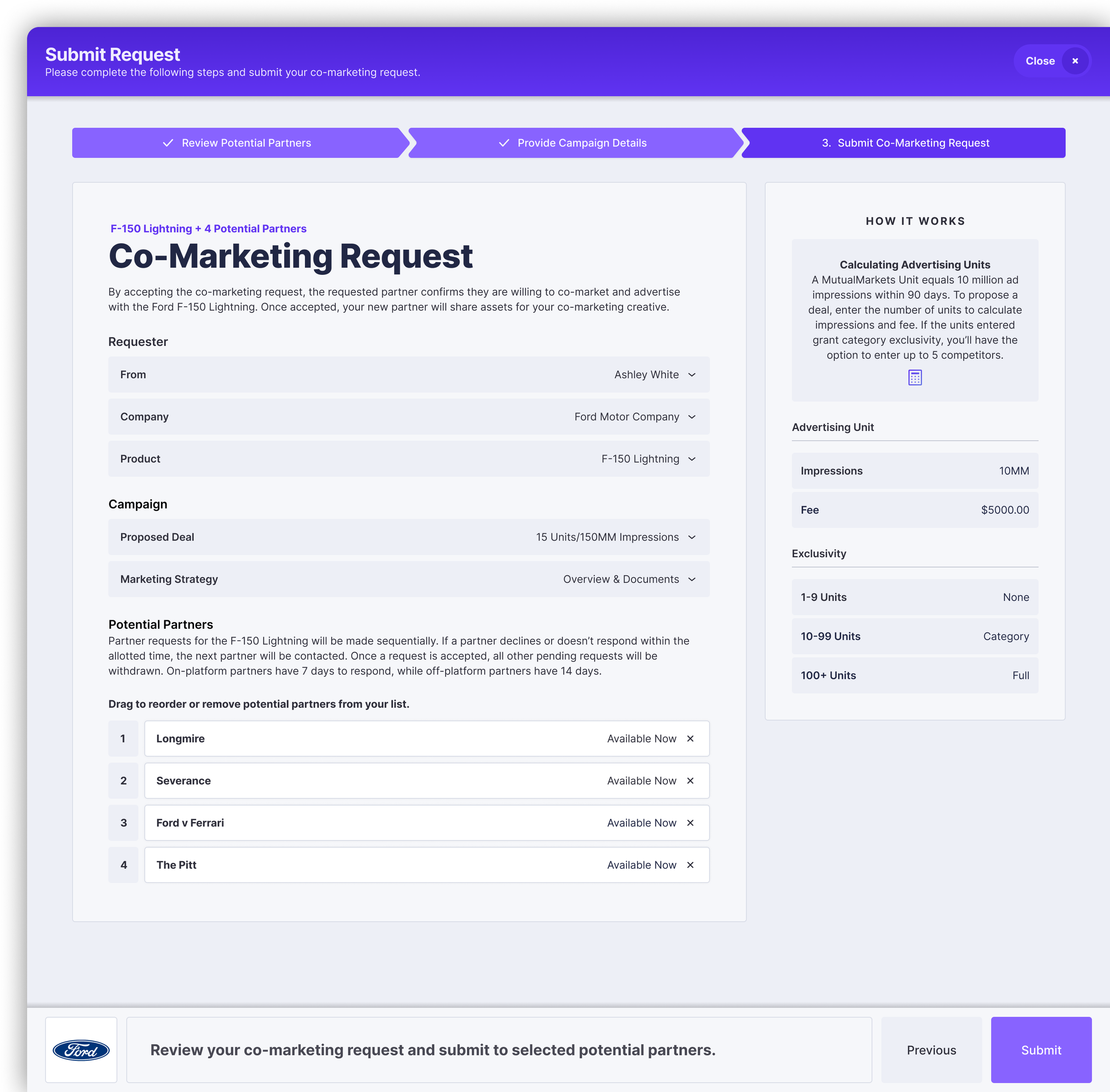
From manual deal-making to structured requests.
A system for initiating deals by selecting partners, defining parameters, and submitting structured requests for collaboration.
Each stage builds on the last, enabling teams to move from opportunity to active deal with clear inputs, shared context, and consistent execution.
Workflow
Deal initiation workflow.
→ Partner Selection
→ Deal Definition
→ Campaign Setup
→ Terms and Deliverables
→ Multi-Request Submission
The Problem: Manual and Disconnected Co-Marketing Requests
Before MutualMarkets, brands had no structured way to request co-marketing partnerships with major networks and streaming platforms such as Netflix, Amazon Prime Video, Hulu, Disney+, HBO Max, and Paramount+ for specific TV shows and movies.
Requests were initiated through email, agencies, or direct outreach, requiring significant back-and-forth to define campaign details, align on expectations, and provide supporting materials. Each request was handled independently, with no consistent format or shared system to guide the process.
Even after a deal was secured, it was disconnected from execution. There was no continuity between the initial request, deal negotiation, and campaign execution, making the process fragmented, difficult to track, and hard to scale.
As a result, submitting requests was time-consuming and inconsistent, while both brands and networks lacked the structure needed to move efficiently from opportunity to execution.
My Role
As the founding product designer, I designed the co-marketing request system that enables brands to initiate deals through structured co-marketing requests to networks and content owners.
I defined the platform architecture and interaction model for structuring requests as a guided workflow. The system allows brands to select partners, define campaign details, and propose a marketing strategy within a single, standardized request.
I designed workflows that enable brands to submit requests to multiple partners simultaneously, reducing manual coordination and back-and-forth while increasing the speed of deal initiation.
Each request is connected to the broader partnership lifecycle, creating continuity from initial outreach through deal formation and campaign execution. This ensures that work progresses seamlessly within a unified system rather than restarting after a deal is accepted.
Explore this project in Figma.
Each prototype includes a guided flow through the primary experience. Explore at your own pace. Prototypes open in a new window.
How Ashley initiates partnership deals across multiple partners.
Ashley moves quickly from partner selection to deal initiation without relying on manual coordination or negotiation. The request workflow gives her the structure and flexibility to reach multiple partners, align on strategy, and secure the right opportunities faster.
Reaches multiple partners at once, reducing time to secure partnerships.
Replaces weeks of back-and-forth with a structured request that defines terms and deliverables upfront.
Makes faster decisions with pre-populated partner and campaign details.
Aligns stakeholders by sharing strategy and supporting materials within the request.

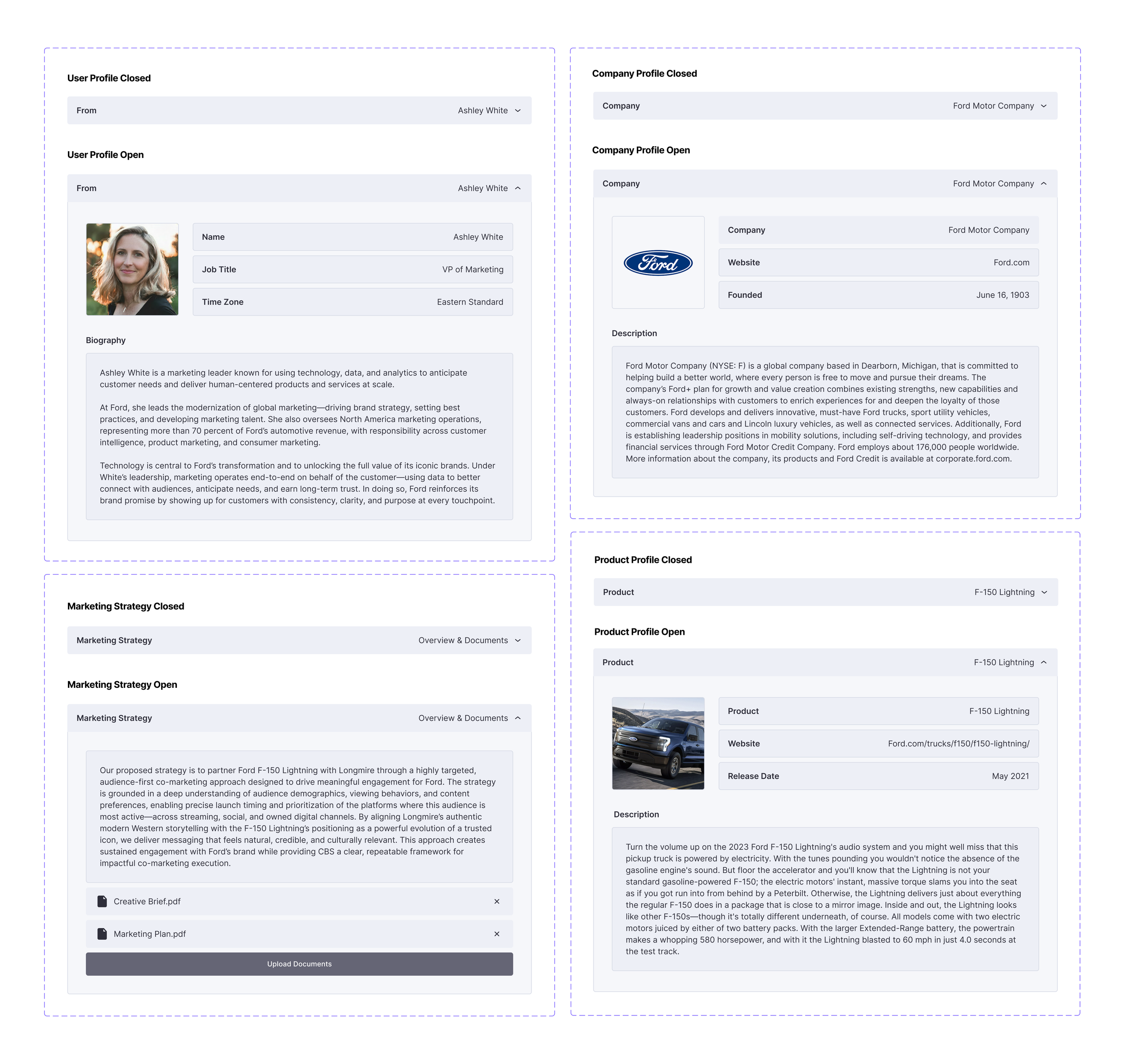
Design system components supporting a scalable platform.
These components support interactive prototypes, developer handoff, and consistent implementation across the platform. They are designed for reuse across workflows, enabling faster iteration and scalable implementation.