Platform Design: Managing Partnerships at Scale
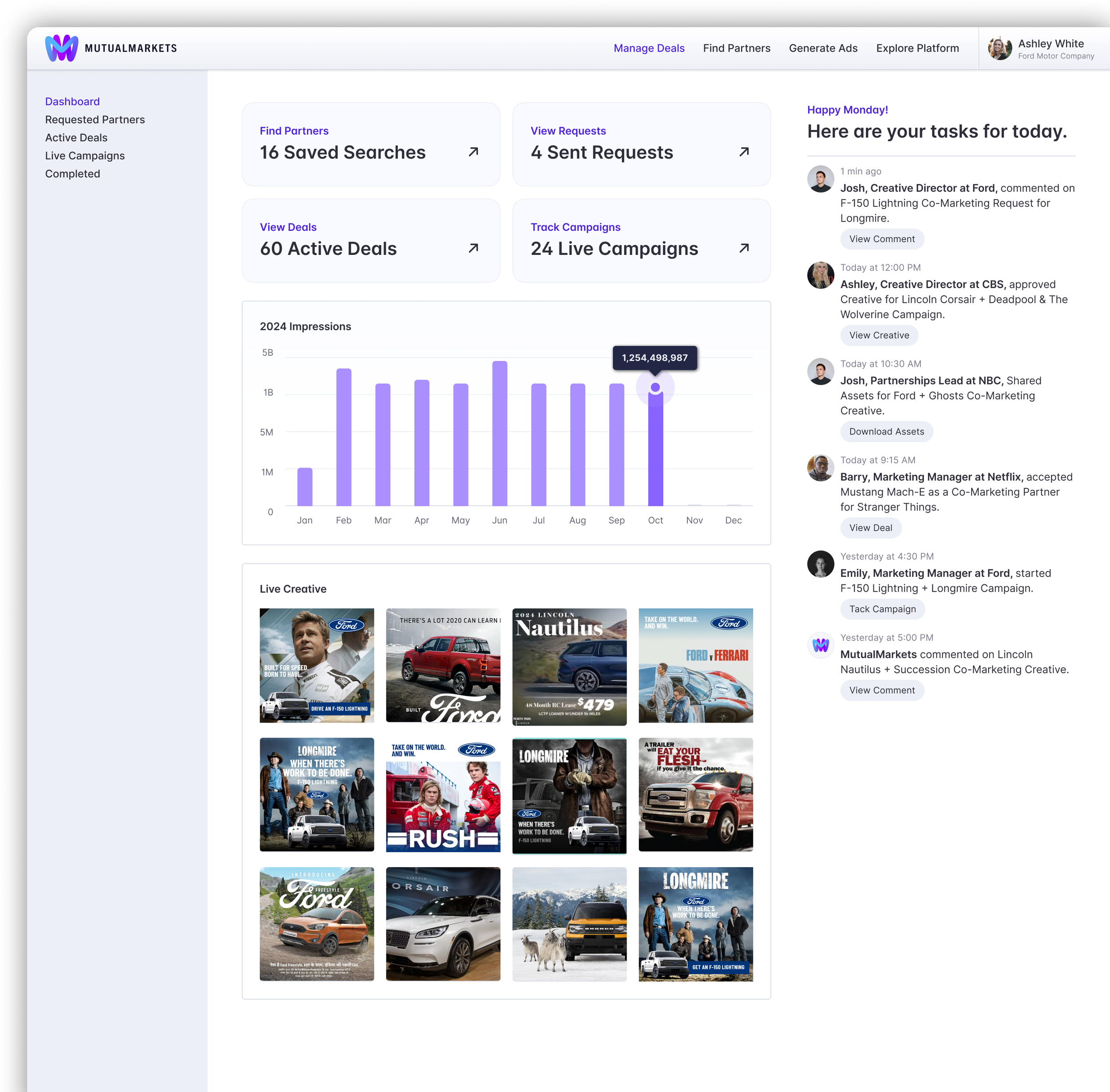
The MutualMarkets dashboard serves as the operational hub for brand teams, bringing all deals into a single, actionable view. It aggregates activity across the system and surfaces what needs to happen next, transforming a fragmented, relationship-driven process into a structured, task-driven workflow where teams can track deal state, maintain accountability, and keep multiple partnerships moving without losing momentum.
Through the dashboard, users can:
View all deals across states, including requested, in progress, live, and completed, in one place.
See exactly what needs to happen next, with tasks surfaced based on deal status and partner activity.
Manage multiple partnerships simultaneously without losing visibility or control.
Move deals forward through structured workflows for negotiation, approvals, asset delivery, and campaign launch.
Maintain alignment with partners through a shared system that tracks progress, decisions, and next steps.
Role: Founding Product Designer and Director — defined UX strategy, platform architecture, and core system workflows.
Transforming fragmented coordination into a unified platform.
A system for managing partnerships across multiple active deals from discovery through execution and performance.
Each stage is connected, enabling teams to see what needs to happen next, maintain clear ownership, and keep work moving.
Lifecycle
End-to-end partnership workflow.
→ Discovery
→ Negotiation
→ Planning
→ Execution
→ Performance
The Problem: Fragmented Coordination
Partnership coordination between brands and entertainment partners was fragmented across email, private networks, shared documents, and manual follow-ups. There was no centralized system to discover partners, manage multiple opportunities, or coordinate deals across the full lifecycle.
As a result, these partnerships were largely limited to large brands with the resources to manage complex, manual workflows. Coordinating multiple deals across different partners required constant follow-up, with no clear system for ownership, next steps, or accountability.
As deals progressed, communication broke down, tasks were missed, and momentum stalled. Each partnership required constant manual coordination, making the process slow, opaque, and difficult to scale.
My Role
As the founding product designer, I designed the operational system that enables teams to manage and advance multiple deals simultaneously through a single, coordinated workflow.
I defined the platform architecture and core interaction model for managing deals end-to-end. The dashboard serves as the operational hub, while each deal functions as a shared workspace where both the content owner and brand partner can track progress, complete tasks, and stay aligned.
I designed a task-driven system that surfaces what needs to happen next across all active deals, allowing teams to manage multiple workflows without losing momentum. By structuring work into clear, actionable steps, the system keeps both sides accountable and ensures deals continue progressing without coordination breakdowns.
This structure creates a clear rhythm of collaboration, where ownership is explicit, state is visible, and momentum is maintained across the end-to-end lifecycle of a deal.
Explore this project in Figma.
Each prototype includes a guided flow through the primary experience. Explore at your own pace. Prototypes open in a new window.
How Ashley manages partnerships across brands, campaigns, and deals.
Ashley manages partnerships across multiple brands, campaigns, and stakeholders, requiring clear visibility into deal activity, ownership, and next steps. The dashboard gives her a centralized view of deal activity, ownership, and progress, allowing her to coordinate work and keep partnerships moving forward.
Provides real-time visibility into active, in-progress, and potential deals.
Surfaces next actions so both brand and content partners stay on task.
Maintains continuity across long deal cycles, allowing work to resume without friction.
Centralizes communication, approvals, and campaign tracking to ensure alignment and accountability.

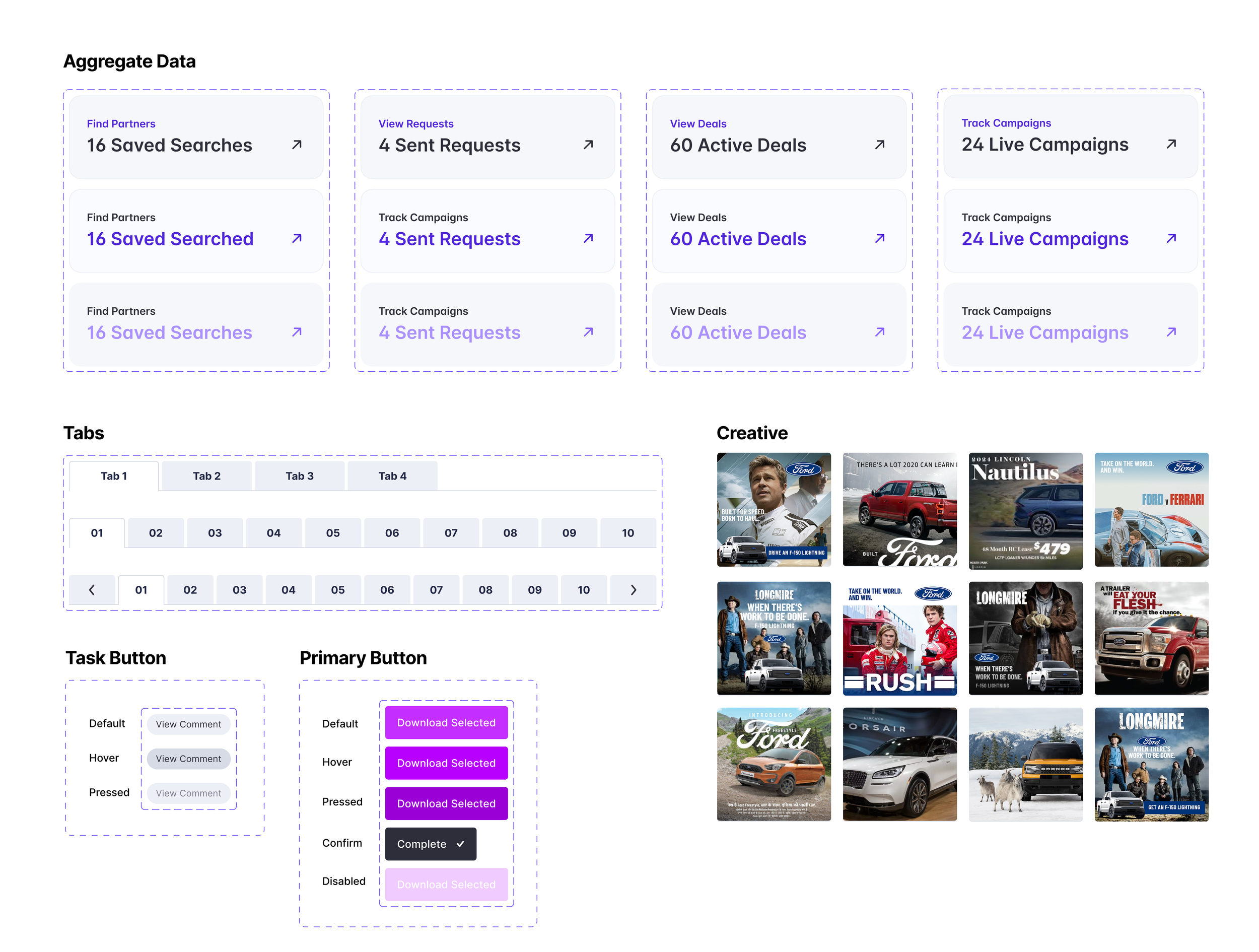
Design system components supporting a scalable platform.
These components support interactive prototypes, developer handoff, and consistent implementation across the platform. They are designed for reuse across workflows, enabling faster iteration and scalable implementation.