Generative AI: Campaign Visualization
This experience transforms abstract partnership opportunities into tangible creative direction. It provides a structured environment for exploring alignment, generating concepts, and evaluating partnership potential through AI-assisted creative.
Through this experience, users can:
Understand the strategic connection between brands and partners.
Generate taglines that express shared themes and positioning.
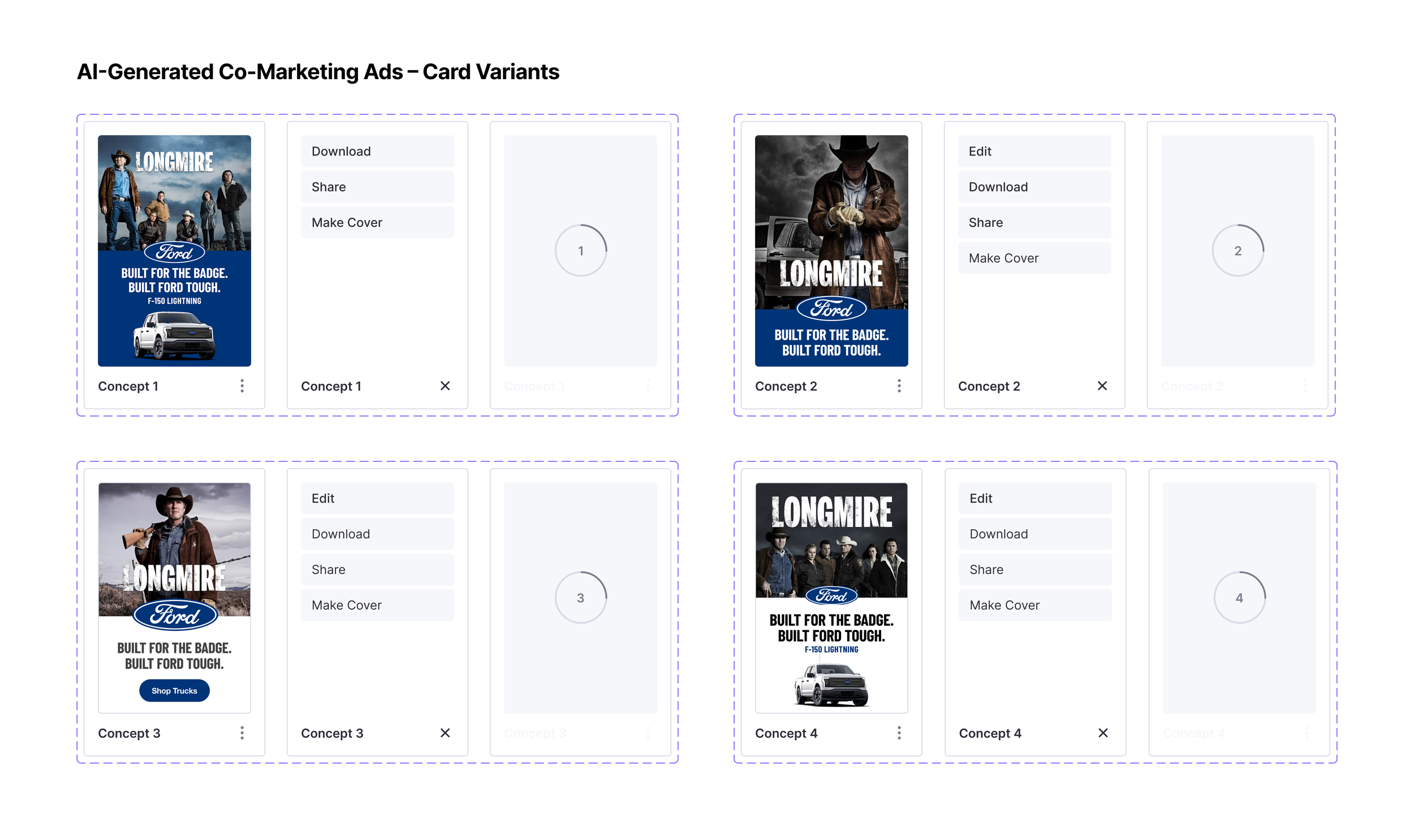
Visualize co-marketing campaigns through generated creative.
Apply brand-authored inputs to explore custom directions.
Share c to align stakeholders and support decision-making.
Role: Founding Product Designer and Director — defined UX strategy, platform architecture, and core system workflows.
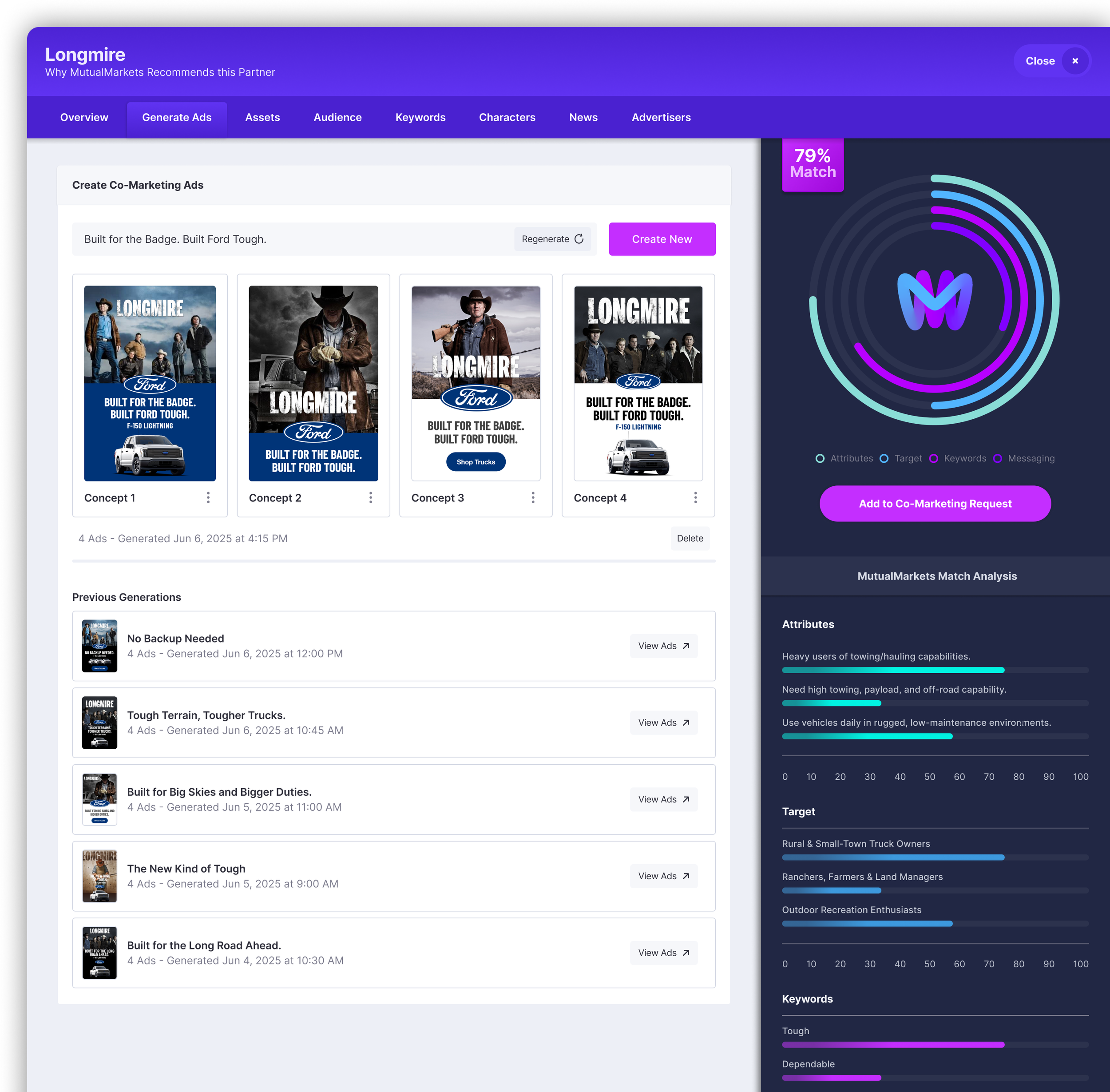
From recommendations to campaign concepts.
A system for translating partnership opportunities into tangible creative directions.
Each stage builds on the last, enabling teams to explore ideas, evaluate alignment, and refine concepts before moving into execution.
Workflow
Creative evaluation workflow.
→ Partner Discovery
→ Recommendations
→ Brand Analysis
→ Concept Generation
→ Concept Iteration
→ Concept Validation
The Problem: From Insight to Uncertainty
Partnership discovery was driven by predictive insights and strong recommendations, but teams lacked a way to translate those insights and recommendations into tangible creative concepts.
Without a way to visualize how a partnership could come to life, opportunities remained abstract. Teams struggled to assess quality, evaluate brand alignment, and build confidence in their decisions.
As a result, decision-making slowed, alignment across stakeholders broke down, and promising opportunities were difficult to validate before moving into execution.
My Role
As the founding product designer, I designed the creative evaluation system that enables teams to turn partnership opportunities and recommendations into tangible campaign concepts and make informed decisions before execution.
I defined the platform architecture and interaction model for moving from data-driven recommendations to visual creative output. The system allows users to generate concepts, apply brand inputs, and explore multiple directions within a single workflow.
I designed workflows that surface AI-generated outputs as concrete representations of partnership opportunities and recommendations, making it easier to assess quality, evaluate brand alignment, and compare concepts side by side.
By structuring concept generation, iteration, and refinement into a continuous workflow, the system enables teams to move from abstract insight to validated direction with clarity and confidence.
Explore this project in Figma.
Each prototype includes a guided flow through the primary experience. Explore at your own pace. Prototypes open in a new window.
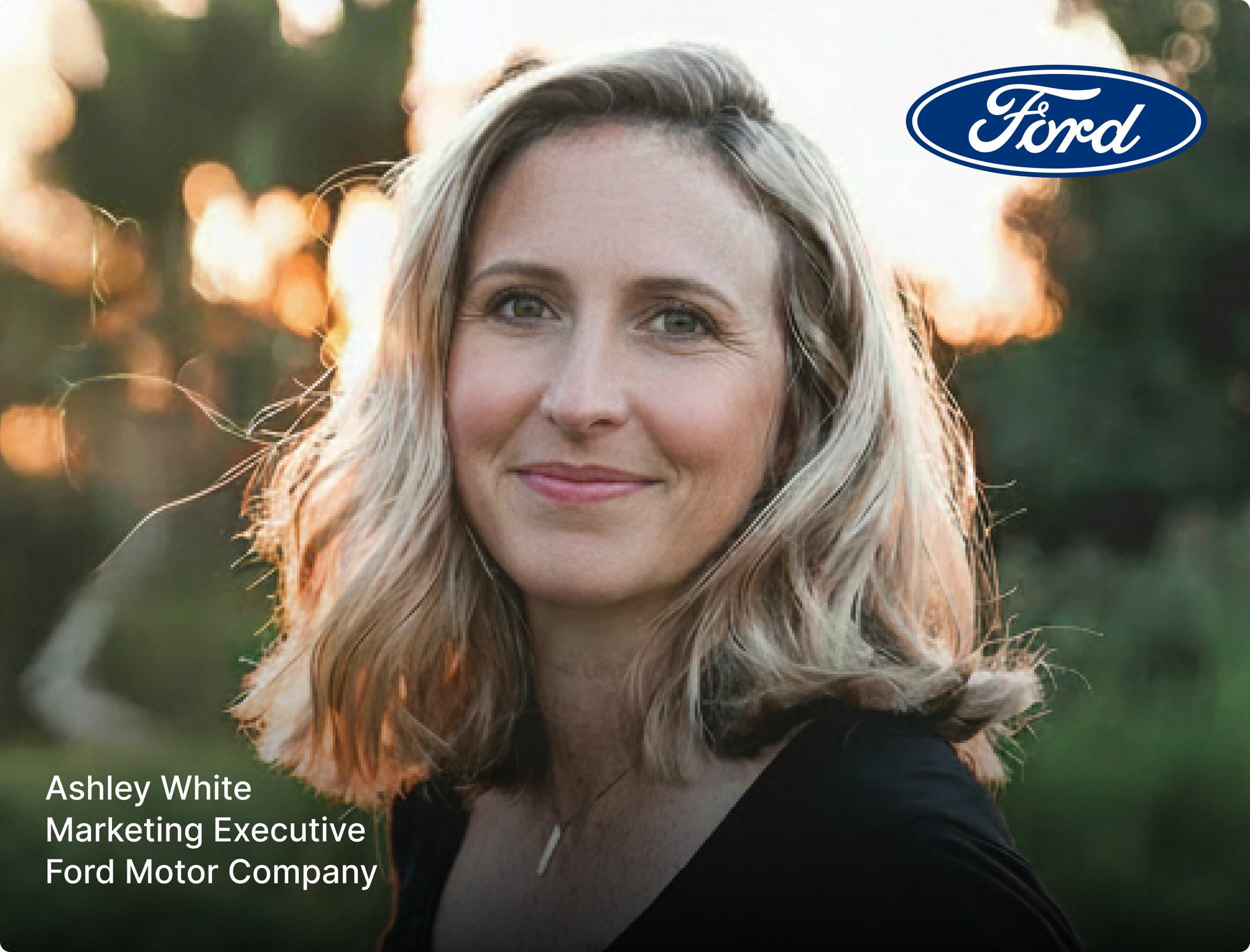
How Ashley evaluates partnership opportunities with AI-generated creative.
Ashley relies on these tools to reduce uncertainty and accelerate confident decision-making around partnership opportunities:
Reduces risk by previewing how a partnership could play out.
Turns abstract opportunities into tangible examples.
Enables early assessment of brand fit and alignment with Ford’s voice and audience.
Supports internal buy-in with concrete examples that are easier to communicate.
Guides creative direction with strong starting points for more focused collaboration.
Design system components supporting a scalable platform.
These components support interactive prototypes, developer handoff, and consistent implementation across the platform. They are designed for reuse across workflows, enabling faster iteration and scalable implementation.